Dermal fillers are injectable treatments that restore lost facial volume, smooth deep lines, and subtly reshape features — all without surgery. Results are visible almost immediately, and most patients are back to their normal routine the same day or the next.
If you’ve been noticing hollowness under your eyes, flattening in your cheeks, or lips that have lost their definition, dermal fillers may be exactly the kind of refresh you’ve been considering. This guide covers everything you need to know before booking a consultation in Dallas.
What Are Dermal Fillers?
Dermal fillers are gel-like substances injected beneath the skin to add volume, lift, or contour specific facial areas. Most are made from hyaluronic acid (HA) — a naturally occurring sugar molecule found in your skin that binds moisture and supports structure. As we age, HA levels decline, collagen breaks down, and fat pads in the face shift or shrink. That’s when features start to look less defined, and the face can take on a tired or sunken appearance.
Fillers work by replenishing what’s been lost. Depending on the product used and where it’s injected, they can:
- Restore volume to sunken cheeks or temples
- Smooth nasolabial folds (the lines from nose to mouth)
- Define and plump the lips
- Reduce hollowness under the eyes (tear trough area)
- Add projection to the chin or jawline
- Soften marionette lines around the mouth
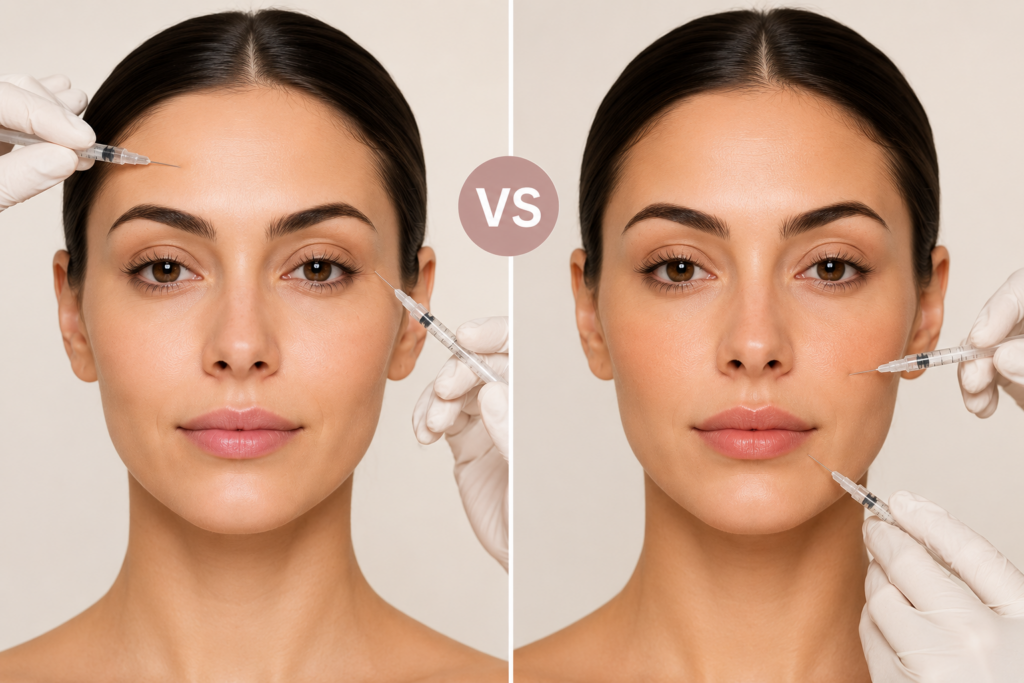
Unlike Botox, which relaxes muscles to reduce dynamic wrinkles (lines caused by movement), fillers physically add structure and volume. The two treatments are often used together for a more comprehensive facial refresh.
Read more: Everything to Know About a Botox Brow Lift

Common Uses for Dermal Fillers
Lip Augmentation and Definition
Lip filler is one of the most requested injectable treatments, and for good reason. If your lips have always been on the thinner side or you’ve noticed them losing their shape over time, fillers can add volume, define the cupid’s bow, and soften vertical lip lines.
The goal isn’t to make lips look bigger for the sake of it — it’s about proportion and balance. A skilled injector studies your facial anatomy before choosing filler type, placement, and volume.
Cheek and Midface Volumization
The midface is one of the first areas to show age-related volume loss. When cheek fat pads descend and thin out, the face can start to look flat, tired, or older than you feel. Strategically placed filler in the cheeks lifts and repositions facial contours, which can also have a downstream effect on the nasolabial folds below. Many patients find that cheek filler alone creates a refreshed look without touching any other area.
Under-Eye Hollows (Tear Trough Treatment)
Dark circles under the eyes are often not about pigmentation at all — they’re about shadow caused by hollowness. Tear trough filler is a more advanced injection technique that carefully places product in the under-eye area to reduce the depth of the hollow and improve the transition between the lower eyelid and cheek. It requires precision and experience, which is why patient selection and injector skill matter enormously here.
Learn more about facial procedures in Dallas with Dr. Johnson.
Types of Dermal Fillers: What’s the Difference?
Not all fillers are the same. Different products are formulated for different areas and goals. Here’s a quick comparison of the most commonly used types:
| Filler Type | Best For | How Long It Lasts |
|---|---|---|
| Hyaluronic Acid (e.g., Juvederm, Restylane) | Lips, under-eyes, nasolabial folds, cheeks | 6–18 months, depending on product and area |
| Calcium Hydroxylapatite (e.g., Radiesse) | Cheeks, jawline, hands | 12–18 months |
| Poly-L-Lactic Acid (e.g., Sculptra) | Gradual volume restoration, temples | 2+ years (builds collagen over time) |
| PMMA (e.g., Bellafill) | Deeper folds, acne scarring | Semi-permanent (5+ years) |
Hyaluronic acid fillers are the most popular because they’re versatile, reversible with an enzyme called hyaluronidase, and produce natural-looking results when placed correctly. During your consultation, Dr. Johnson will evaluate which product and placement strategy make the most sense for your anatomy and goals.
Am I a Good Candidate for Dermal Fillers?
Fillers are a versatile option, but they’re not the right solution for every concern. Here’s a straightforward look at who tends to benefit most:
| You may be a good candidate if… | You should discuss further if… |
|---|---|
| You have mild to moderate volume loss or lines | You have significant skin laxity that may require a surgical lift |
| You want results without surgery or downtime | You have active skin infections or inflammation in the treatment area |
| You have realistic expectations about what fillers can achieve | You’re pregnant or breastfeeding |
| You’re in good general health | You take blood thinners that can’t be paused |
| You want a reversible or temporary treatment | You’re seeking permanent structural change |
It’s also worth noting that dermal fillers work best when the skin itself still has reasonable elasticity. If there’s significant skin sagging — for example, around the lower face or jowls — a facelift in Dallas may be a more appropriate option. Dr. Johnson will discuss this honestly during your consultation rather than fitting you into a treatment that won’t give you the outcome you’re hoping for.
Quick tip: Fillers and surgery aren’t mutually exclusive. Many patients combine injectable treatments with procedures such as a facelift or blepharoplasty for a naturally refreshed look.
What to Expect: Before, During, and After Dermal Fillers
Before Your Appointment
A few days before your filler appointment, you’ll want to avoid blood thinners like aspirin, ibuprofen, fish oil, and vitamin E — these increase the risk of bruising. Alcohol should also be avoided for at least 24 hours prior. Come to your appointment with a clean face and, if possible, avoid scheduling it right before a major event, as mild swelling or bruising may occur.
During the Treatment
Most filler appointments take 30–60 minutes, depending on how many areas are being treated. A topical numbing cream is typically applied beforehand, and most modern fillers contain lidocaine, which makes the injections more comfortable. You’ll remain awake throughout. Dr. Johnson will discuss your goals again before starting and use a conservative, precise approach — it’s always easier to add more than to correct too much.

After Your Appointment
Expect mild swelling, redness, or bruising at the injection sites for a few days. Lips tend to swell more noticeably than other areas. Most patients feel comfortable returning to work or social activities within 24–48 hours. Avoid strenuous exercise, excessive heat (saunas, hot yoga), and lying flat for several hours after treatment. Full results are visible once swelling settles — usually within 1–2 weeks.
Read more: What Is Jaw Contouring Surgery?
How Long Do Dermal Fillers Last?
Results vary by filler type, area treated, and individual metabolism. As a general guideline:
- Lips: 6–12 months (lips metabolize filler faster due to movement)
- Nasolabial folds and marionette lines: 9–12 months
- Cheeks and midface: 12–18 months
- Under-eyes: 9–12 months
- Jawline and chin: 12–18 months
Many patients find that with consistent maintenance appointments, they need less product over time as the filler supports the tissue. Results are also influenced by lifestyle factors — sun exposure, smoking, and high-impact exercise can all accelerate breakdown.
Why Choose Dr. Bret Johnson in Dallas
When it comes to injectables, the injector’s skill and anatomical knowledge matter just as much as the product being used. Dr. Bret Johnson is a board-certified plastic surgeon who completed his residency at UT Southwestern Medical Center (consistently ranked the number one plastic surgery program in the nation) followed by a fellowship in craniofacial surgery. That foundation in facial anatomy sets him apart from non-surgical injectors who may not have the same depth of structural understanding.
At his Dallas practice on North Central Expressway, Dr. Johnson takes a consultative, patient-first approach. He doesn’t use a one-size-fits-all injection formula—he evaluates your unique facial proportions, skin quality, and goals before recommending any treatment. If fillers aren’t the right fit for what you want to achieve, he’ll tell you that, too.
Schedule your consultation with Dr. Johnson in Dallas, or call the office at 469-250-9065.
Ready to Refresh? Your Next Step with Dermal Fillers in Dallas
Dermal fillers offer one of the most accessible entry points into cosmetic treatment — minimal downtime, visible results, and a level of customization that’s hard to match. If you’re addressing volume loss, redefining your lips, or softening lines that have crept in over the years, the right approach starts with an honest conversation about your goals.
Dr. Bret Johnson and his Dallas team are ready to help you figure out if fillers are the right fit — and if they are, to deliver results that look like you, just refreshed.
Ready to take the next step? Contact Dr. Johnson’s office at 469-250-9065 and schedule your personalized consultation today.

Frequently Asked Questions: Dermal Fillers
How long do dermal fillers last?
Most dermal fillers last between 6 and 18 months, depending on the product used and the area treated. Lips tend to metabolize filler faster, while cheek and jawline fillers often hold up longer. Maintenance appointments help sustain results over time.
Do dermal filler injections hurt?
Most patients experience only mild discomfort during filler injections. Topical numbing cream is applied before treatment, and many fillers contain lidocaine to ease the process. Most describe the sensation as a slight pinch or pressure, not pain.
Can dermal fillers be reversed?
Yes, hyaluronic acid fillers can be dissolved using an enzyme called hyaluronidase. This is one of the reasons HA fillers are the most popular choice: they offer flexibility if you’re unhappy with the results or want to adjust them. Non-HA fillers like Radiesse or Sculptra cannot be reversed in the same way.
What’s the difference between dermal fillers and Botox?
Botox relaxes the muscles that cause dynamic wrinkles, while dermal fillers add volume and structure beneath the skin. They address different concerns and are often used together — Botox for forehead lines and crow’s feet, fillers for cheeks, lips, and hollowing. Your provider will help determine which treatments fit your goals.
Who is the best injector for dermal fillers in Dallas?
Dr. Bret Johnson is a board-certified plastic surgeon in Dallas with deep expertise in facial anatomy, making him an exceptional choice for dermal filler treatments. His training at UT Southwestern and his surgical background mean he brings a level of anatomical precision to injectable treatments that goes beyond what is standard in injector training. Book a consultation to discuss your goals directly with Dr. Johnson.