A facelift typically lasts 7 to 10 years, with many patients enjoying results well beyond that depending on their skin quality, lifestyle, and surgical technique. That’s not a short-term fix — it’s a meaningful reset of the aging clock. Understanding what drives longevity helps you set realistic expectations and get the most out of your investment. Whether you’re researching your first facelift or wondering if a revision makes sense, here’s what you actually need to know.
What Happens During a Facelift (and Why It Matters for Longevity)
A facelift, or rhytidectomy, addresses the deeper structural causes of facial aging — not just surface-level skin laxity. Aging causes fat to shift downward, muscles to loosen, and skin to lose elasticity. A facelift repositions these deeper layers, tightens the underlying SMAS (superficial muscular aponeurotic system), and removes excess skin for a result that looks natural and holds up over time.
This deeper-layer approach is why modern facelifts last so much longer than older techniques, which focused primarily on pulling skin tight. Skin-only lifts tend to snap back faster. When the structural foundation is addressed, results are more durable.
Learn more about facelift surgery in Dallas with Dr. Bret Johnson and see what a personalized approach looks like.

Factors That Influence How Long a Facelift Lasts
Not every facelift result ages at the same pace. Several variables play a role in how long yours will hold.
Surgical Technique
Technique is one of the biggest differentiators. A deep-plane facelift, which lifts the SMAS layer along with overlying fat and soft tissue, tends to produce longer-lasting and more natural-looking outcomes than more superficial approaches. When you consult with a board-certified surgeon, ask specifically about the technique they recommend for your anatomy and goals.
Skin Quality and Genetics
Genetics matter more than most people realize. If your parents aged gracefully, you likely have a head start. Patients with thicker, more resilient skin typically maintain results longer than those with thinner or heavily sun-damaged skin. Collagen and elastin levels — both partly genetic — also play a role in how well your skin holds its new position over time.
Lifestyle Habits
Smoking is one of the most damaging things you can do to facelift results. It impairs circulation, breaks down collagen, and accelerates skin aging. Sun exposure without protection has a similar effect. Patients who don’t smoke, wear SPF daily, stay hydrated, and maintain a stable weight tend to get more mileage out of their results.
Age at the Time of Surgery
Younger patients often see results last longer simply because their skin has more residual elasticity. That said, younger doesn’t always mean better timing — candidacy depends more on when you have enough visible aging to justify the procedure than on a specific number.
How Long Does a Facelift Last Compared to Other Facial Procedures?
Not all facial rejuvenation options are created equal when it comes to longevity. Here’s a quick comparison:
| Procedure | Typical Longevity | What It Addresses |
|---|---|---|
| Facelift (rhytidectomy) | 7–10+ years | Jowls, deep folds, skin laxity, neck |
| Neck lift | 5–8 years | Loose neck skin, banding, double chin |
| Blepharoplasty (eyelid surgery) | 5–10 years | Drooping eyelids, under-eye bags |
| Botox | 3–6 months | Dynamic wrinkles (forehead, crow’s feet) |
| Dermal fillers | 1–2 years | Volume loss, static lines |
| Thread lift | 1–3 years | Mild skin laxity |
A facelift is clearly the most durable option for moderate to significant facial aging. Combining it with complementary procedures like a neck lift or blepharoplasty can extend your overall rejuvenated appearance even further.
Read more: What to know about facelift/rhytidectomy cost in Dallas
What to Expect: Before, During, and After a Facelift
Before Surgery
Your consultation is where everything starts. Dr. Johnson will evaluate your facial anatomy, skin quality, and goals to determine whether a facelift is the right fit and which technique is most appropriate. Pre-op instructions typically include stopping certain medications, avoiding smoking for several weeks, and arranging for post-surgery help at home.
During Surgery
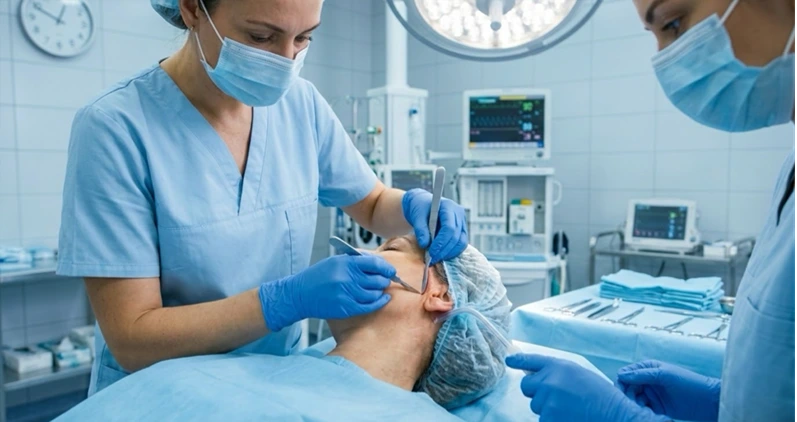
A facelift is usually performed under general anesthesia or IV sedation and takes 3 to 5 hours. Incisions are strategically placed at the hairline and around the ears to minimize visible scarring. The deeper tissues are repositioned, excess skin is trimmed, and the incisions are closed with care for natural-looking results.
After Surgery and Recovery
Most patients take 2 to 3 weeks off work. Swelling, bruising, and some tightness are normal in the first few weeks. By 6 weeks, most patients feel comfortable in social settings. Full results settle over 3 to 6 months as swelling resolves completely and tissues relax into their new position.
| Recovery Milestone | Typical Timeframe |
|---|---|
| Return to light activity | 1–2 weeks |
| Back to work (low-key) | 2–3 weeks |
| Comfortable in public | 4–6 weeks |
| Final results visible | 3–6 months |
Maintaining results long-term involves sun protection, a consistent skincare routine, and follow-up visits with your surgeon. Some patients opt for non-surgical touch-ups like Botox or fillers between years to maintain their look.
Why Choose Dr. Bret Johnson in Dallas
When it comes to a procedure as impactful as a facelift, the surgeon’s training and experience make a real difference in how long your results last and how natural they look. Dr. Bret Johnson is a board-certified plastic surgeon based in Dallas, trained at UT Southwestern Medical Center — widely recognized as one of the top plastic surgery residency programs in the country. He also completed a fellowship in craniofacial surgery, giving him advanced expertise in facial anatomy that directly translates to facelift outcomes.
Dr. Johnson takes a personalized approach. He doesn’t offer a one-size-fits-all technique. During your consultation, he’ll evaluate your skin, anatomy, and aging pattern to recommend the approach most likely to give you durable, natural-looking results — and walk you through exactly what to expect at every stage.
His practice is located in North Dallas, easily accessible for patients throughout the DFW area. If you’re ready to take the next step, schedule a consultation or call 469-250-9065.
Explore all facial procedures offered by Dr. Johnson to find the right combination for your goals.
Read more: Everything to know about a Botox brow lift — a non-surgical complement to facelift results
Making the Decision: How Long Does a Facelift Last
How long does a facelift last? For most patients, 7 to 10 years is the realistic range — and for many, the benefits extend well beyond that with proper care. A facelift isn’t about stopping the aging process; it’s about resetting where you are in it. The right technique, performed by a skilled surgeon, can give you results that look natural for years to come.
If you’re in the Dallas area and wondering whether the timing is right for you, Dr. Bret Johnson offers personalized consultations to help you make an informed decision without pressure. Reach out online or call 469-250-9065 to get started.
Frequently Asked Questions: How Long Does a Facelift Last
What happens 10 years after a facelift?
Ten years after a facelift, you’ll still look better than if you’d never had the procedure — you just won’t look the same as you did right after surgery. Aging continues naturally, so some laxity and volume loss will return over time. Many patients at the 10-year mark choose to either embrace their refreshed-but-naturally-aged look or consult about a secondary facelift or non-surgical maintenance options. The baseline improvement, however, is lasting.
What is the best age to get a facelift?
Most facelift candidates are between 45 and 70, but the right age depends on your individual anatomy and degree of facial aging, not a number. Some patients in their early 40s develop significant jowling or skin laxity early, while others in their 60s still have excellent skin quality. Dr. Johnson evaluates each patient individually to determine whether surgery is appropriate and what technique will serve them best long term. 📌 Read more: How old do you have to be to get plastic surgery?
What are the negatives of a facelift?
Like any surgical procedure, a facelift carries risks including scarring, swelling, temporary numbness, and a recovery period of 2 to 3 weeks. More serious complications like infection or nerve injury are rare but possible. It’s also worth noting that a facelift addresses skin laxity and structural aging but doesn’t restore lost facial volume — that may require fillers or fat grafting in addition to surgery. A thorough consultation with a board-certified surgeon helps you weigh benefits against realistic risks for your specific situation.
Should a 70-year-old get a facelift?
Age alone is not a disqualifier — health status and skin quality matter far more than the number of candles on your birthday cake. Many patients in their late 60s and 70s are excellent candidates and achieve meaningful, long-lasting improvements. The key considerations are overall health, whether you’re cleared for anesthesia, and realistic expectations about what surgery can accomplish at this stage of aging. Dr. Johnson evaluates older patients carefully and can advise whether a full facelift or a more targeted approach is the better fit.