Breast Reconstruction

Breast reconstruction in Dallas, TX helps women restore shape, symmetry, and confidence following mastectomy or lumpectomy. Whether reconstruction is performed immediately after cancer surgery or as a delayed procedure, the goal remains the same: helping you feel whole again. Dr. Bret Johnson works closely with each patient and her oncology team to select the technique and timing that best fits her anatomy, treatment plan, and personal goals.
breast reconstruction consultation

Board-Certified Breast Reconstruction Surgeon in Dallas, TX

Breast reconstruction in Dallas, TX requires both technical mastery and a compassionate understanding of what patients navigate through cancer treatment and recovery. Dr. Bret Johnson is a board-certified plastic surgeon trained at UT Southwestern, one of the nation’s top-ranked residency programs, with additional fellowship training in craniofacial surgery. He approaches every case with careful planning, close coordination with the oncology team, and a commitment to outcomes that feel natural and personally meaningful.

An Overview of Breast Reconstruction

Breast reconstruction rebuilds the breast mound using implants, the patient’s own tissue, or a combination of both. The procedure is coordinated with the oncology team and can begin at the time of mastectomy or after cancer treatment is complete. The right approach depends on cancer treatment requirements, radiation history, body type, and personal preferences.

Reconstruction options include:

  • Implant-based reconstruction (tissue expander followed by permanent implant)
  • Autologous reconstruction using your own tissue (DIEP, TRAM, or latissimus dorsi flap)
  • Combination approaches using both tissue and implants
  • Nipple and areola reconstruction
  • Symmetry procedures for the opposite breast
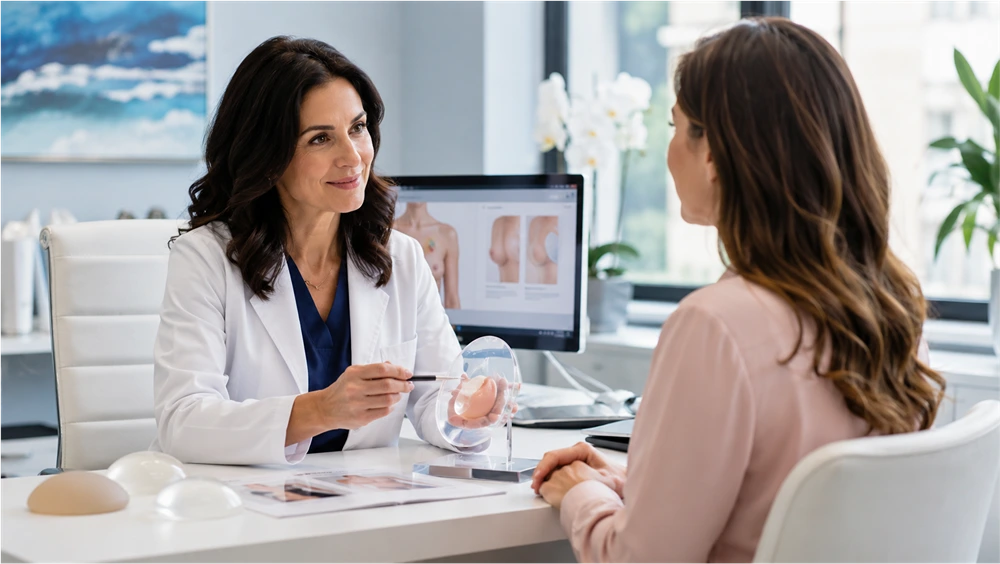
Caucasian woman and plastic surgeon choosing breast implants.

What Breast Reconstruction Addresses

Post-Mastectomy Breast Mound Restoration

Mastectomy removes breast tissue, and reconstruction rebuilds the shape and volume of the breast. The goal is a natural-looking result that restores body symmetry and allows patients to feel comfortable in clothing and at rest.
Partial mastectomy can leave visible contour irregularities or asymmetry. Oncoplastic techniques reshape remaining tissue or add volume to restore a smoother, more balanced appearance after breast-conserving surgery.
Nipple and areola reconstruction is typically the final phase of the reconstruction process. It can be accomplished surgically or through medical tattooing, and Dr. Johnson works with each patient to achieve a result that feels complete and natural.
When reconstructing one breast, the opposite side may benefit from a breast lift, breast reduction, or breast augmentation to create a balanced result. Dr. Johnson discusses symmetry options during the consultation so patients understand the full scope of what is possible.

Some patients seek reconstruction after a prior attempt produced unsatisfactory results, or after delayed healing from radiation therapy. Dr. Johnson reviews prior surgical history and develops a revised plan to improve shape, symmetry, and overall outcome. Learn more about implant revision as part of a secondary reconstruction plan.

Breast Reconstruction Techniques

Not all reconstruction approaches work the same way. The best option depends on the patient’s anatomy, cancer treatment history, radiation exposure, body type, and personal goals. Dr. Johnson selects from the full range of reconstructive techniques to develop a plan tailored to each patient.

Filler Type

Common Brands

Best For

Longevity

Hyaluronic Acid (HA)

Juvederm, Restylane, Belotero

Lips, tear troughs, cheeks, folds

6–18 months

Calcium Hydroxylapatite

Radiesse

Jawline, cheeks, deep folds, hands

12–18 months

Poly-L-Lactic Acid

Sculptra

Gradual volume restoration, overall rejuvenation

2+ years

PMMA

Bellafill

Deep folds, acne scarring

Semi-permanent

Benefits of Breast Reconstruction

Restoration of Body Symmetry

Reconstruction restores the breast contour removed by mastectomy, helping patients feel proportionate and balanced in clothing, swimwear, and everyday life.

Immediate Reconstruction Available

When timing allows, immediate reconstruction means patients wake from cancer surgery with a breast mound already in place, avoiding the experience of living without a breast between procedures.

Natural-Looking, Personalized Results

Every reconstruction plan is tailored to the patient's body type, skin quality, radiation history, and goals. Dr. Johnson's approach prioritizes results that look and feel natural rather than overly constructed.

Permanent Solution Without External Prosthetics

Reconstruction eliminates the ongoing need for external breast forms, providing a permanent, integrated result patients do not have to manage each day.

Supports Emotional Recovery

Many patients find that reconstruction plays a meaningful role in their recovery from cancer treatment. Feeling physically whole again supports confidence, body image, and overall quality of life.

woman's breast covered with adhesive tape after surgery to correct a congenital anomaly

Risks and Considerations

Breast reconstruction is a major surgical procedure, and outcomes depend on factors including cancer treatment history, radiation exposure, body type, and overall health. Common temporary side effects include swelling, bruising, tightness, and changes in sensation at the surgical site. Patients who have received radiation may face a higher risk of healing complications, which significantly affects technique selection. Choosing a board-certified plastic surgeon with dedicated reconstructive experience is one of the most important decisions in achieving a safe and successful outcome.

Ready to Rebuild with Confidence?

Schedule Your Breast Reconstruction Consultation with Dr. Bret Johnson.

The Breast Reconstruction Consultation

During the consultation, Dr. Johnson reviews the patient’s oncology history, mastectomy details, radiation treatment (past or planned), and overall health to determine the safest and most effective reconstruction approach. He evaluates skin quality, body proportions, and the condition of remaining tissue to guide technique selection. For patients planning mastectomy, early coordination with the breast surgeon allows immediate reconstruction timing to be established in advance.

The consultation is the right time to:

  • Review reconstruction technique options and their trade-offs
  • Discuss timing: immediate versus delayed reconstruction
  • Understand how radiation history affects technique selection
  • Ask about symmetry procedures for the opposite breast
  • Review before and after photos from similar patients
  • Learn about recovery timelines and what to expect at each stage

Breast Reconstruction: What to Expect

Before Surgery

Pre-surgical preparation varies based on technique and whether reconstruction is immediate or delayed. Patients should stop blood-thinning medications and supplements as directed, avoid smoking for several weeks before and after surgery, and complete any required medical clearances. If tissue expansion is planned, Dr. Johnson will explain the staged process so patients know what to expect at each phase.
Breast reconstruction is performed under general anesthesia. Implant-based reconstruction typically involves placement of a tissue expander at the time of mastectomy, followed by a second procedure to exchange the expander for a permanent implant. Autologous flap procedures involve transferring tissue from a donor site such as the abdomen or back, requiring a longer operative time. Dr. Johnson’s team prioritizes patient safety and surgical precision at every stage.
Recovery depends on the technique used. Implant-based reconstruction typically involves a shorter initial recovery, while flap procedures require more time for both the chest and donor site to heal. Most patients manage discomfort with prescribed medication in the first week and gradually resume activity over several weeks. During recovery, patients should avoid:
  • Heavy lifting and strenuous activity for 4 to 6 weeks
  • Driving while taking prescription pain medication
  • Sleeping on the chest during early recovery
  • Activities that strain the donor site, if flap reconstruction was performed
Swelling resolves progressively over several months. Final results continue to improve as tissues settle and mature.
Cosmetic Surgeon Shows Female Patient Breast Implant Samples and Talk About Her Future Surgery.
A medical professional demonstrates a silicone breast implant alongside a human anatomy model during a consultation in a clinical setting

Complementary Procedures

Symmetry Procedures

Reconstruction of one breast often prompts patients to address the opposite side for a balanced outcome. Procedures including breast lift or breast reduction can be performed concurrently or in a staged approach, depending on the patient’s treatment timeline and health.

Patients who have previously undergone implant-based reconstruction may seek implant revision to address changes in shape, implant position, or soft tissue coverage over time. Dr. Johnson evaluates the prior reconstruction and develops a plan to improve the result.

Fat transfer can be used to refine the reconstructed breast, smooth contour irregularities, or add soft tissue volume around an implant. It is commonly used as a secondary refinement procedure after primary reconstruction is complete.

Recovery and Healing Timeline

Recovery after breast reconstruction varies depending on the technique used and the individual patient. Implant-based procedures generally involve a shorter initial recovery, while autologous flap procedures require healing at both the chest and donor site. Most patients return to light activity within a few weeks and resume fuller activity over one to two months.

Typical breast reconstruction recovery milestones:

  • Days 1–3: Hospital stay for monitoring; surgical drains in place to manage fluid
  • Days 4–14: Drains removed; swelling and tightness begin to subside
  • Weeks 2–4: Light daily activities resume; driving cleared when off prescription medication
  • Weeks 4–6: Return to non-strenuous work; lifting and exercise restrictions remain
  • Months 2–3: Most swelling resolved; breast mound begins to settle into final position
  • Months 3–6+: Nipple reconstruction performed if desired; scars continue to mature and fade

Before and After Results

Before and after photos from Dr. Johnson’s breast reconstruction patients are available to review during the consultation. Seeing results from patients with similar anatomy and treatment histories helps set realistic expectations and supports informed decision-making.
Bust of a woman before and after breast augmentation surgery. Woman in bra with different sizes of breast on white background. Plastic surgery concept.

How Much Does Breast Reconstruction Cost in Dallas?

The cost of breast reconstruction in Dallas varies based on the individual patient’s anatomy, technique selection, and surgical plan. Dr. Johnson provides specific pricing recommendations during the consultation after a thorough assessment.

Cost factors include:

  • Reconstruction technique selected (implant-based vs. autologous flap)
  • Whether reconstruction is immediate or delayed
  • Number of stages required (e.g., tissue expander placement followed by implant exchange)
  • Symmetry procedures planned for the opposite breast
  • Facility and anesthesia fees
Many patients have breast reconstruction covered in full or in part by health insurance under the Women’s Health and Cancer Rights Act, which mandates coverage for mastectomy patients. Financing options are also available for any out-of-pocket costs. The consultation is the right time to discuss coverage, projected costs, and payment options in detail.
Plastic surgeon marking womans breast with pen before surgery, patient standing topless while doctor draws incision lines on chest, medical aesthetic procedure, medical mammoplasty, mastopexy

Restore What Cancer Surgery Changed.

Schedule Your Breast Reconstruction Consultation with Dr. Bret Johnson in Dallas.

Why Choose Dr. Bret Johnson for Breast Reconstruction in Dallas, TX?

Board-Certified Plastic Surgeon

Dr. Bret Johnson combines advanced surgical training with dedicated reconstructive expertise, helping patients achieve results that restore both appearance and confidence after cancer treatment.

Coordinated, Patient-Centered Care

Dr. Johnson works directly with each patient's oncology team to align reconstruction timing with the cancer treatment plan. Every recommendation is built around the patient's medical history, anatomy, and personal goals rather than a standardized approach.

Natural Aesthetic Philosophy

The goal of reconstruction is restoration. Dr. Johnson focuses on outcomes that feel balanced, natural, and personally meaningful to each patient, not just technically complete.

Full Range of Reconstructive Options

Dr. Johnson offers the complete spectrum of reconstructive approaches, from implant-based procedures to microsurgical autologous flap techniques, allowing him to recommend the method best suited to each patient's body and treatment history. Explore all available breast procedures to understand the full range of options.

Breast Reconstruction FAQs

When can breast reconstruction be performed?

Breast reconstruction can be performed immediately at the time of mastectomy (immediate reconstruction) or months to years later (delayed reconstruction). The right timing depends on the cancer treatment plan, whether radiation is required, and the patient's overall health. Dr. Johnson discusses timing options during the consultation and coordinates closely with the oncology team.

Under the Women's Health and Cancer Rights Act, health insurers that cover mastectomy are required to cover breast reconstruction as well. This includes reconstruction of the treated breast, symmetry procedures for the opposite breast, and prostheses. Coverage specifics vary by plan, so it is important to verify benefits before scheduling surgery.

Implant-based reconstruction uses a tissue expander followed by a permanent silicone or saline implant to rebuild the breast mound. Autologous reconstruction uses the patient's own tissue, typically from the abdomen or back, to create a natural breast shape without a synthetic implant. Each approach has distinct trade-offs in recovery, scarring, feel, and long-term durability that Dr. Johnson reviews in detail during the consultation.

Sensation changes after mastectomy and reconstruction vary by patient and technique. Many patients experience reduced or altered sensation in the reconstructed breast, particularly following mastectomy. Some nerve regeneration can occur over time, but outcomes vary by individual. Dr. Johnson discusses realistic expectations regarding sensation during the consultation.

Operative time depends on the technique selected. Implant-based reconstruction with tissue expander placement typically takes one to two hours. Autologous flap procedures, particularly microsurgical techniques like the DIEP flap, can take four to eight hours or more. Staged procedures involve separate surgical appointments, which Dr. Johnson outlines during the consultation.

Nipple and areola reconstruction is an optional final step that many patients choose to complete the reconstruction process. It is typically performed as a separate outpatient procedure once the breast mound has fully settled. Medical tattooing is another option for recreating the areola. Dr. Johnson reviews both approaches during the consultation.

Yes, though radiation affects technique selection. Radiated tissue has reduced healing capacity, which can increase the risk of complications with implant-based reconstruction. Autologous flap procedures are often preferred for patients who have received radiation because transferred tissue is healthier and more resilient. Dr. Johnson evaluates radiation history carefully when developing a reconstruction plan.

Scarring depends on the reconstruction technique used. Implant-based reconstruction typically produces scars along the mastectomy incision line. Autologous flap procedures create additional scars at the donor site, such as the lower abdomen or upper back. Dr. Johnson discusses incision placement and scar management strategies during the consultation so patients know what to expect.

The number of procedures varies by technique and individual goals. Implant-based reconstruction often involves two stages: tissue expander placement followed by implant exchange. Autologous flap reconstruction may be completed in one stage, though refinements or nipple reconstruction may require additional procedures. Dr. Johnson outlines the full planned sequence during the consultation.

Contact Dr. Bret Johnson's Dallas office by calling 469-250-9065 or by completing the form below. The consultation is the first step toward building a personalized reconstruction plan based on your medical history, anatomy, and goals.

Reach Out for a Personalized Consultation

Have questions? Ready to take the next step? Contact us to schedule a one-on-one consultation with Dr. Johnson. We’ll discuss your goals, answer your questions, and help you achieve a refreshed, youthful look.

We do NOT offer any free study or trial surgeries.